
Domestic violence awareness
Domestic violence continues to be a grim reality in both Habersham County and the northeast Georgia region as a whole.
Suzanne Dow, an executive director of the Habersham County Circle of Hope for 21 years, said that the organization has seen a significant rise in domestic violence cases, resulting in more women being at-risk and in need of either shelter or assistance, since the start of the COVID-19 pandemic.
“In general, domestic violence continues to be an issue in Habersham and in all of northeast Georgia. It hasn’t gone away, and what is happening is incidents of increased injury – high lethality situations – which means victims are at-risk of being murdered by their partners that are committing acts of domestic violence. So there’s just been an increase of that level of intensity and danger and more violent outcomes,” Dow said, adding that she’s seen this spike in cases of domestic violence in all three of the counties Circle of Hope serves, including Habersham.
Dow believes the spike of such incidents is directly tied to the pandemic, stating that victims being isolated in their homes with an abusive partner and certain economic factors have created a higher likelihood of abuse taking place.
“COVID-related, there’s been an increase of domestic violence in general – people were stuck at home with the person that was battering them,” Dow said. “There’s economic stress put on those families that might’ve not been in place before, so we’ve seen a surge of new cases of people reaching out for services more so than the year prior to COVID. We’ve had a big increase in services.”
Circle of Hope has a slew of programs intended to aid the victims of domestic violence. In addition to operating an emergency shelter – which the organization is most commonly known for – Circle of Hope also offers other outreach efforts for victims of domestic violence.
“We have what we call ‘outreach,’ and that’s people who don’t need shelter, and that’s where we’ve seen a big increase,” Dow said, adding that, after a recent calculation, amounted to a 12 percent increase (about 50 people) needing either a protective order, support group, relocation assistance or counseling.
The programs and services offered by Circle of Hope range from efforts of legal advocacy to providing aid through counselling, transportation and housing.
“Victims who are experiencing domestic violence, [and] need some sort of assistance to address that – their reaching out wanting help,” Dow said before describing the organizations legal role in the process. “A protective order is issued through a judge through the court system and it tells the person doing the battering and the abuse to stay away from the victim, so that’s a big part of that program.”
“They also might not want that or qualify for that,” Dow added. “But they might want counseling or safety, or they’re leaving that situation that’s dangerous and they just need help securing their new housing, so we have financial assistance that help with rent and utilities and start-up costs and furniture and that kind of stuff to help people start over if they’re leaving a domestic violence situation. So that’s the program we’ve seen the biggest increase in.”
Circle of Hope also offers what Dow refers to as supportive housing programs – a sort of recovery initiative intended to revive the livelihoods of those who’ve suffered from abusive partners. After leaving the shelter, victims will receive continued assistance.
“We run four different options for people to leave the shelter and move into one of our housing programs, and that’s a longer time we can work with them with wraparound services,” Dow said. “They can get counseling, access the support groups. We just help them figure out what they need to work on while they’re in that program, and they have longer to accomplish it. We’re very invested in those housing programs.”
Circle of Hope, operated in large part by volunteers, is also one of the only organizations in the county with 24-hour hotline, text line and online chat line available for victims of abuse to seek help in the event of crisis. The hotline in specific could receive up to more than 1000 calls a year, Dow said, and around 19-20 each week.
According to Dow, Circle of Hope’s domestic violence shelter in Habersham County more or less stays at capacity throughout the year.
“We’re licensed for 17 people, but we can hold up to 24, and so we usually have over 20 people in the shelter at a time,” Dow said. “We stay at capacity all year long.”
Still, as a principle of Circle of Hope’s mission, the organization will never turn a victim away despite limited resources.
“Sometimes we can’t put [victims] in the shelter because we’re full, so we have other resources,” Dow said. “We’ll never tell a victim, ‘No, we can’t help you.’ We have other resources to safely house them until there is an opening at the shelter.”
Throughout the pandemic, Circle of Hope’s 30 employees and volunteers have gone beyond the call of duty to see that victims continue to receive service, stating that several workers and their families within the organization have contracted COVID-19.
“We had to change how we did things,” Dow said. “We stayed open – we really worked on trying to get that message out – our staff still came to work and were available to meet with victims. The court systems, for instance, shut down for a long time, but victims still needed protective orders, so those were still happening but they were happening virtually.”
“So you had a judge on a Zoom call, and our advocate and the victim doing all that. We transitioned our support groups to a virtual platform. We transitioned our individual counseling to a virtual platform. All of that took effort on everybody’s part. But everything is now back to in person,” Dow added, stating the regular in-person efforts resumed in fall of 2020. “We only did virtual stuff as long as we had to.”
Funding continues to be a central need for the organization, Dow said, as the organization was not able to hold fundraisers in 2020 due to COVID – which also thwarted Circle of Hope’s financial situation in other ways as well.
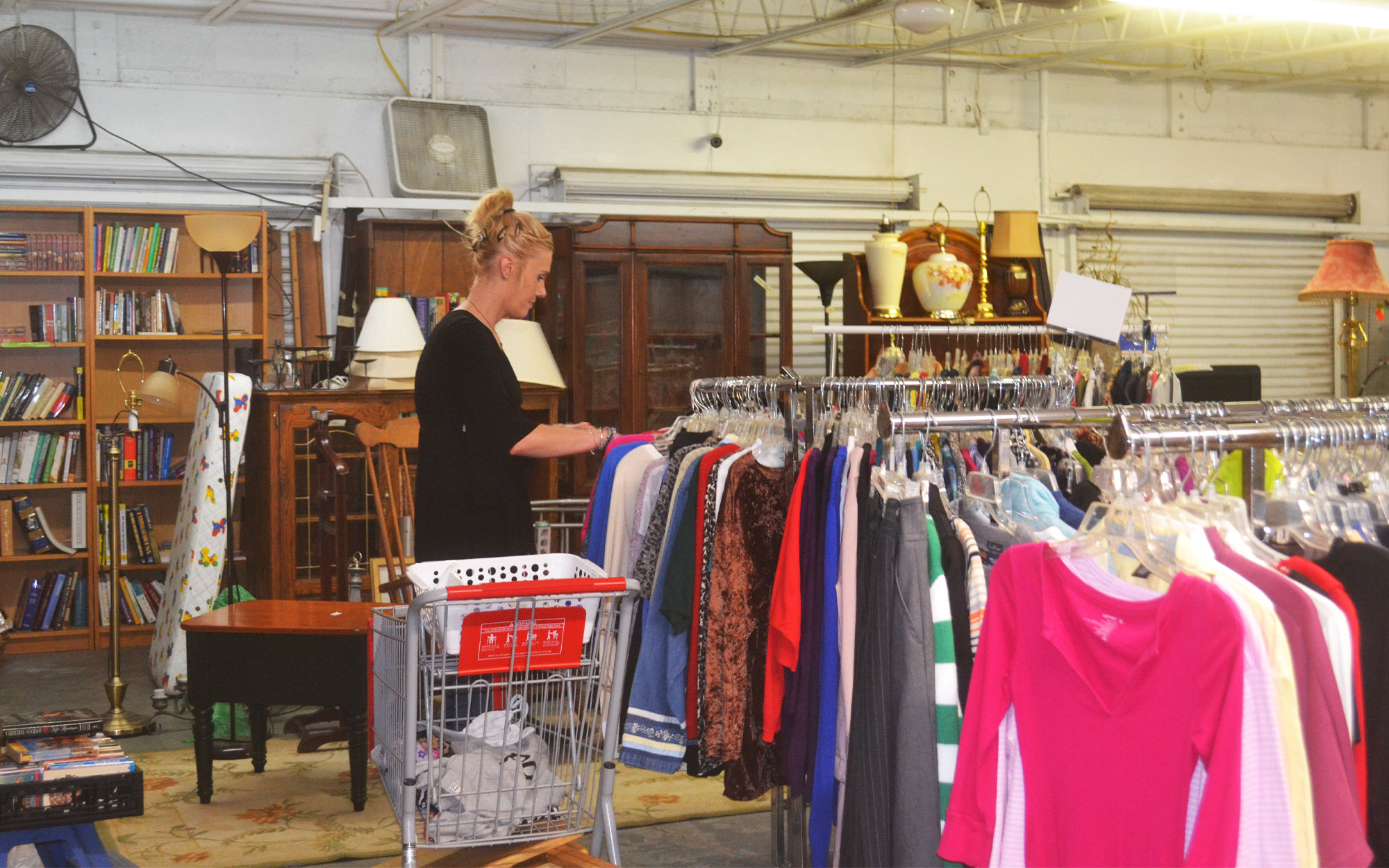
“We have two thrift stores that we use to generate funds for our program operations [like] the emergency shelter and other programs. Those stores were shut down for three months, and that really impacted the [funds] in 2020. Then, when we opened back up, we had volunteers who didn’t feel safe coming back to work in those thrift stores,” Dow said, adding that this required the organization to hire additional staff members to keep the thrift stores open.
“Our stores have been our biggest area of impact – on top of our fundraiser,” Dow said, explaining that the Circle of Hope’s Dancing with the Stars event saw a sudden cancelation a week before it was expected to happen.
The Dancing with the Stars fundraising event was able to take place this year, Dow said, and that $107,000 was raised by the community, exceeding their fundraising goal.
A person’s tendency to commit acts of domestic violence can be a cyclical factor, Dow said, explaining that “a majority of victims start relationships with an abuser between the age of 13-24.”
“Prevention is key to putting an end to domestic violence,” Dow said.
Curbing the trend of domestic violence, according to Dow, starts with instilling anti-violence messages in today’s youth. Circle of Hope has a school prevention program, she said, where a member of the organization will speak to young children, promoting the specific message that “Hands are for helping and not for hitting.”
Dow said also that if Habersham County could address one issue that would impact not just victims of domestic violence but a range of other issues faced by disadvantaged members of the community, it’d be transportation.
“[Volunteers] will help transport victims to appointments,” Dow said. “Lack of transportation is a barrier in this community. If Habersham County could fix one thing, it’d be a transportation system. I don’t think people in general understand how many people don’t have access to reliable transportation.”
Circle of Hope provides victims of abuse with food and medical needs at no cost, Dow said, and that a large number of people may be unaware of that.
“One of the biggest misconceptions as an agency that is out there about us is people know Circle of Hope as a shelter, and they don’t realize we have all this other stuff we can help victims with, so [victims] don’t contact us,” Dow said. “We’re really working on trying to change that awareness and make sure people know we have that outreach programs.
Dow explained that while staff members oftentimes see drug abuse among disadvantaged people and families at-risk of experiencing instances of domestic violence, substance abuse is not a cause of domestic violence.
“Drugs and alcohol don’t cause domestic violence. Domestic violence is about power and control over another person. Take away drugs and alcohol, a person still wants power and control over another person,” Dow said before explaining that drugs and alcohol amplify existing problems in abusive relationships.
“That’s when you’ll see the more intense outcomes of a violent situation,” Dow said. “Weapons end up being pulled and used. The injuries are worse sometimes. Those things don’t cause domestic violence, but of course our community has a huge problem with drugs, unfortunately.
Circle of Hope, as an agency, provides direct in-person services to between 500 and 600 families a year, according to Dow.
The organization relies heavily on state and federal grants (making up about 74 percent of their budget), individual donations and items purchased at the organization’s thrift stores help contribute to their cause of addressing domestic violence.
Donations of basic needs like diapers and toiletry items are also a major need for the organization.
If a person suffering from domestic abuse needs shelter or assistance, contact Circle of Hope’s crisis hotline at 706-776-HOPE (4673), toll-free at 1-800-33HAVEN (1-800-334-2836) or by email at contact@gacircleofhope.org.
The crisis text line is 706-768-1616.