
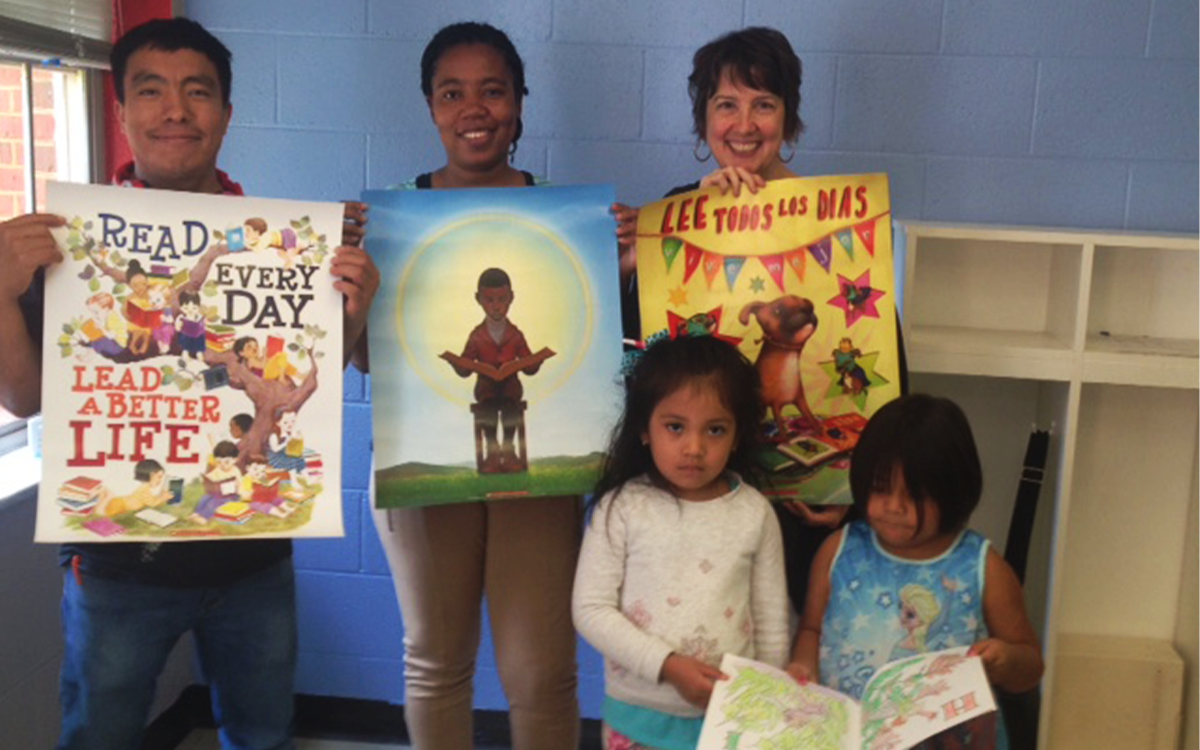
Volunteer for Literacy’s English Language Acquisition (ELA) program, which provides free classes to English language learners, is looking for a new home as they prepare to start their classes after Labor Day.
Phylecia Wilson, executive director at Volunteers for Literacy, said the program, which teaches English to undocumented immigrants, is hoping to find community support in Habersham County and continue to offer free classes to those who would greatly benefit from learning the language.
“For people to come in here and be able to learn English is helpful in so many ways,” Wilson said, adding that it includes being able to communicate with their children’s teachers and doctors. “It improves their quality of life, they get better jobs, we encourage them to get their GED if they don’t have that, and we also encourage them to get their citizenship.”
The ELA program also has a partnership with the North Georgia Technical College, which teaches English to documented learners, and both have seen great success stories throughout the years.
“We have had people who have gone through the program, learned English, and have gotten better jobs,” Wilson said. “Their children have graduated high school and have gone to North Georgia Technical College and just a lot of great stories like that about how learning English has made a difference in their lives. We want to continue that.”
The program recently received a grant from Dollar General’s Literacy Foundation to hire an instructor.
“They support adult literacy. They are very supportive and we have gotten grants from them before but it’s been two or three years…so we were really excited to get it,” Wilson said. “Some of the money will come from our budget and we are funded by United Way as well, so United Way gave us some funding for that.”
Charlise Rowley, who had previously volunteered for ELA, was hired as ELA’s new instructor, which she said has not only brought her an immense amount of joy but also the opportunity to learn from the students she’s had the privilege of teaching.
“I loved the students. They were highly motivated, very bright and it was fun,” Rowley said. “It was a challenge to make English fun for them when I knew it was also difficult and I enjoyed their stories about coming from another culture and appreciated the kinds of things they were up against, moving to a new country.”
With Rowley as the new addition to the program, Wilson said they are hoping to restart stronger than they were before the pandemic took a toll.
“We are reorganizing. COVID really made it difficult and we had fewer and fewer numbers coming so our director at the time decided that we just needed to stop the program for now,” Wilson said.
Earlier this year, Wilson said the program was notified that First Baptist Church of Cornelia would be ending their partnership of 10 years, citing a bad fit. According to Wilson, no other reason was provided.
“In April, we were informed by Volunteers for Literacy leaders operating on our campus that they were ending their academic year prematurely and pulling their resources from our building,” a statement from First Baptist Cornelia read. “After their departure it became apparent there was a lack of communication between VFL leadership operating on our campus and VFL board leadership. We were saddened by this turn of events and hope VFL can in time return to organizational health. Let us be clear, at no point did First Baptist Church ask VFL to leave. For over 10 years, First Baptist Cornelia has embraced all English language learners within our walls. We continue to strengthen our partnership with North Georgia Technical College’s ESL program, even offering space this academic year for evening classes and language immersion experiences with church members.”
Wilson said the loss of the partnership with First Baptist was a great one but the program is determined to find a new home.
While Rowley jokes that she is ready to teach with only a white board and some markers, she is hopeful the program will be able to find the proper space to accommodate all their students’ needs, which often include childcare, to ease some of the hurdles they face.
“We, in the past, we have had two rooms for childcare, one for babies and toddlers and one for pre-K and we had a woman who got them ready for kindergarten,” Wilson said.
Additionally, transportation to and from classes would greatly help those students in need of reliable transportation.
“In the past, we have offered transportation but our van is really not in that great condition so we are trying to find someone who might donate a van to us,” Wilson said, adding that the program hopes to stay in the Cornelia or Baldwin area, where the majority of the people that they teach live. “Since we don’t have public transportation, we want to be in an area that is convenient for them, especially if we can’t provide transportation.”
“We want to make it so there are fewer obstacles and more opportunities,” Rowley said.
For Rowley, being able to help these students expand their knowledge of the English language is important because it gives them an opportunity to be more immersed in their lives in the United States.
“It is hard being in a culture where you cannot speak the language or your speaking is minimal,” Rowley said. “Many of the adults depended on their kids to translate and while that is helpful, it is not ideal in most situations.”
Even the chance of being in a structured learning environment can be new to many of the students who attend the ELA classes.
“Many of them have not had the opportunity to be in school for as long as most Americans have, we take it for granted that we get 12 years of public education and maybe college after that but for many people in other countries that is simply not what they have been exposed to,” Rowley said. “I did not know that in some countries only six years of education are mandatory and I put myself in that position. What would I do if I only had a sixth grade education and I were faced with the complexities of living in the United States right now?”
As ELA continues their search for a location that is willing to host them, both Rowley and Wilson say they hope the community will rally behind their students.
“We are desperately needing a space for a classroom,” Rowley said. “We would like a space that is an appropriate size, that will house some students…but our needs are fairly simple. We just need a place that will let us come together a couple of days a week and start to learn, start to be involved in our educational process.”
Rowley said they hope someone who is “congenial” with the Hispanic community and wants to provide support is able to come forward.
“That would be a wonderful way to offer support to this program and to the Hispanic community in general,” Rowley said. “We hope the people of Habersham County who really care about literacy will come alongside us. The ELA classes are one way we can come alongside and make a more educated workforce for the county. We are desiring to bring in growth, we need relief of the tax burden right now so we are trying to get industry back in the county and in order to get that, I think, we need an educated workforce. We are hoping that those who have that education, who have been blessed to go to school, will be willing to share that blessing with others who have not had the same opportunity.”
“They want the education, they need the confidence,” Rowley said.
Community members who are interested in helping or volunteering can reach Wilson and Rowley through email at echarise@gmail.com and literacy1@windstream.net.