
Ramey fought bravely in World War II
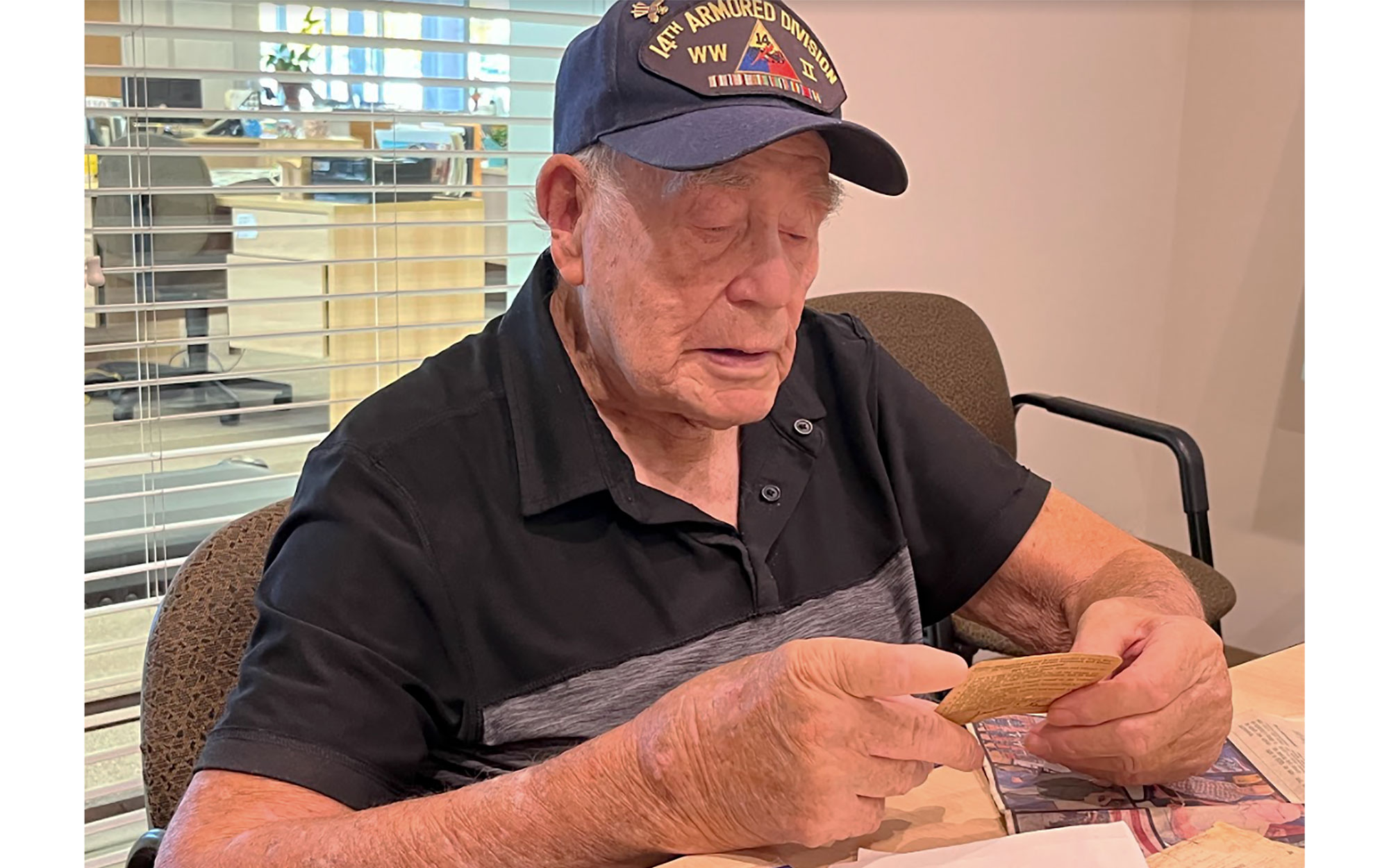
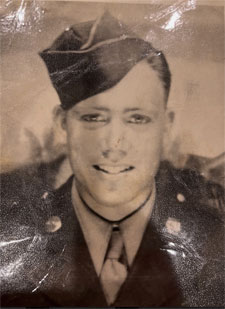
James Ramey at age 21
James Ramey says he does not remember things as well as he used to, but he still recalls quite a bit about his brave service in World War II.
The 96-year-old Ramey – Habersham County’s oldest living veteran – was born in Warren County, but his family moved to Demorest when he was 6 years old in 1931.
Ramey did not finish high school – which only went up to the 11th grade then – by the time he was drafted, as he spent a lot of time helping on the family farm.
Ramey was drafted when he was 18 years old in November 1943. He passed his physical at Ft. McPherson in Atlanta before being sent to Ft. Knox in Kentucky.
“They wanted to put me in the Navy because I didn’t weigh but 135 pounds,” he said. “I wanted to be in the Marines. They said, “You think you’re tough? We are going to send you to hell.’ I did not know where I was going, but they sent me to Fort Knox to drive tanks.”
Ramey learned a lot there and had a chance to go down to the shooting gallery and practice on his own time. That led to him recording the highest-score ever on the range with a .22 rifle.
“They thought at first that I missed because I had three shots,” Ramey said. “They thought the other two missed. They asked ‘Where’d the other bullets go, then?’ I told them they went right through the center.”
The next stop was Camp Hood, Texas, where they put the recruits through all the same training again, including learning to drive the tanks. The trainer did not know Ramey had plenty of expertise already.
“I acted like I was afraid and I went last, and I slipped into the driver’s seat and he was in the assistant’s seat,” Ramey said. “Most of the guys couldn’t get it out of first gear. I took off with him and went around that field, and instead of coming back, I headed straight for the woods and knocked over trees. He was hollering over the radio for me to stop. After I got back, he said, ‘I believe you have ridden before.’”
He later went to Camp Campbell (Ky.) and got run through the ringer of training again before his eventual departure for Marseille, France in October 1944.
“The water was so rough. There were hurricanes all the way over there, and we were in those little light ships they used to use in World War I,” he said. “So they were just dipping all the way, and we were sick as dogs when we got over there.”
The troops from the 14th Armored Division had to wade through the water to get to the shore after the miserable trip. Some of the men drowned, and the ones who survived developed dysentery. They ate cheese to help them stabilize their digestive tracts, and they pulled through.
The men hiked to Ax-Les-Thermes, France, where they were fed a five-course meal.
Ramey said the French soldiers stole about half the equipment they brought with them and used it for themselves.
“We were treated badly by the French the whole time,” he said. “They told us that they were better off under Hitler than they were under us. I asked them why. They said, ‘Well, we had to use a cow to plow our fields before. Since we got under Hitler, we have a horse.’”
Ramey drove his tank across the Vosges Mountains, surprising the Germans who did not think the artillery vehicles capable of such journeys. But the American tanks were smaller than the ones used by Germany and more agile.
The Americans were bombed and strafed by the Germans once they discovered where they were, but their attack failed.
Ramey said he was a daredevil even in his youth, and he used that bravado to help him stay alive during World War II.
His company was heavily involved in a back-and-forth battle at Hatten and Rittershoffen in January 1945. In a later battle during seven months of fighting, he had to fight for every inch for survival.
“They beat us up pretty bad,” he said. “They shot out about two thirds of our tanks. I got behind that tank and dug myself a foxhole so deep I could tiptoe and look out. I stayed there until midnight and it was cold as crap. I was worried that my feet were going to freeze. I looked out and up on the side of the hill was an old two-story house. I got out of the tank so quickly that I did not take a coat with me.
“It was midnight and tracer bullets were going both ways, and I did not know if I dared to get out and crawl or not, but I didn’t have any choice. I got out and crawled up to that house, and I searched the lower floor and could not find a coat, quilt or anything. I went upstairs and there was a man laying in the bed, but I decided he was dead because he did not make a move. In the closet there was a big heavy coat, and I put it on and crawled back to my tank.”
Ramey got his tank shot up again in another clash, and he and his assistant driver were lucky to make it out alive, crawling through the woods to where their fellow American troops were.
Ramey was both driver and mechanic for his tank, and he was required to learn everything about them to keep them running.
The troops advanced into Germany eventually, and one day, Ramey was putting a carburetor on a halftrack when he heard a shot while taking a break for rations. He heard a sound through the nearby tree and realized they were shooting at him.
“I started zigzag running as fast as I could, staying as low as I could get,” Ramey said. “They were machine gunning me all the way down there, and the bullets were coming so close, I could feel them stinging me. I knelt down behind the halftrack to get some protection. You don’t just run out there like they do in the movies.”
The halftrack had a 50-caliber machine gun on top, and Ramey sprayed the woods back and forth until he fired 150 rounds.
“Well, they’ll come get me now if I didn’t kill them,” he said. “Two of them came out with a white flag. A group of black American soldiers came by and said that they had gotten one of their guys earlier and that they would take him off my hands. One of them held a straight razor to the German’s throat. He was sweating in the freezing cold, I will never forget that.”
Ramey asked them not to kill the German soldier, as he had rightfully surrendered.
Later, the 14th helped take Berlin, though Ramey said they did not get the credit they deserved for their role in it.
After fighting in Germany, Ramey was supposed to go to the Pacific after returning briefly to California. But President Truman dropped the atomic bombs, ending the war quickly and precluding him from having to go fight on another front.
Ramey said at one point during his service, his records were somehow lost and he “didn’t exist” in the eyes of the U.S. military. He got shot in the leg but did not get a Purple Heart because he technically did not even show up on the roster.
“But I showed up in the field,” he said. “I think it was the insurance company that lost it. They’ll do what they need to in order to not pay you.”
He has struggled for years to get military benefits, and officials from the VFW and American Legion are trying now to help him with this issue.
Upon his return to Habersham County in 1945, he kissed the ground, because he never thought he would make it back. He married Virginia Crane a year later, with whom he spent his life until her passing in 2009. They had six children together, leading to nine grandchildren and even eight great grandchildren.
In his civilian career, Ramey was a machinist and engineer, spending 35 years with Roper Hydraulics in Commerce. He helped the company get dozens of patents on new products over the years. He took business and management classes at the University of Georgia, and he got his own machine shop to work in.
Today, Ramey is a member of the Grant-Reeves Veteran and Patriot Singers, and until COVID-19 hit, he gave talks at schools about his experiences in the war.