
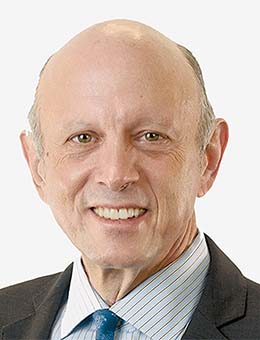
Joshua Peck
• Last in a two-part series.
Cindy Levi is the CEO of Avita Partners, which offers behavioral health services to 13 counties across northeast Georgia. The agency works closely with area hospitals – including Habersham Medical Center – local governments, schools, law enforcement and other community partners, she said.
One unique Avita service is a “peer living room,” Levi said. In addition to an agency staff of some 350 psychiatrists, nurses, licensed counselors and case managers, a person in crisis can meet with a trained peer—an individual with a history of living with mental illness themselves, now trained to help others in similar circumstances. Many guests have found that enormously helpful, she said.
“We work to assist individuals, whatever their needs may be,” she says. One that’s been effective, she says, is a program focused on young people aged 16 to 26 – the age at which psychotic breaks and depression often first surface.
Another promising development may be on the way: In other Georgia counties, including Forsyth, some Avita professionals are stationed at police headquarters, and go out with police officers on calls when a citizen is experiencing a mental health crisis. With new money on the way from the state, that idea may spread to points farther north in the state, like Habersham County, Levi said.
Avita is also training growing numbers of law enforcement officers on how to de-escalate a crisis. She seeks to extend that program to every department in the coverage area.
Words can make a big difference
Megan Funkhouser is the Counseling Program Coordinator at the Family Resource Center (FRC) in Clarkesville, where any community member can get as many as 10 free counseling sessions, thanks to a Georgia state grant. The FRC serves individuals and families who are experiencing difficulties in Habersham, White, Stephens, Rabun and Banks Counties.
Funkhouser compares psychological distress to a soda bottle. “Each stressor or difficult emotion shakes the bottle, and the pressure builds up over time,” she says. “If you can help or get someone to services before it explodes, that can make a difference. You don’t need to be a therapist to support a person in their mental health needs,” she said.
She did caution people to be mindful of their own safety in helping others, especially in situations where an individual is threatening harm to oneself or others; in those instances, one should contact 911 or the Georgia Crisis Hotline. She said every little bit of concern for a depressed, anxious, or suicidal family member, friend or neighbor can make a difference. She states, “the important thing is if you recognize someone going through struggles with their mental health, encourage and support them in getting the professional help they need.”
Sometimes it is hard to initiate discussion about someone’s mental health. Funkhouser recommends having an open and empathetic approach when someone close to you seems to be suffering. “Suppose you see someone sitting down outside and crying,” Funkhouser says. “What I typically will do is approach them, sit or squat down to their level, and gently tap a shoulder or arm to get their attention and not to startle them. This way I am engaging without too much invasion of their space.”
Funkhouser continues, “After I let them know of my presence, I might open the conversation with, ‘Hey, I noticed you look or seem upset, can I sit with you?’” If they agree, she then asks, “Is there something I can do, or help with?” She adds that they may tell you their story and struggles, and providing an empathetic ear may be just what they need in that moment.
Funkhouser says, “I empathize with clients who come into FRC because starting the mental health journey can be difficult.”
“Our ultimate goal is that you fire us,” Funkhouser says. “We hope that at some point you no longer need us. At the same time, if you need to return a few months or years after you completed services with us, then we will be here to support you as you come back into services.”
Avita’s Demorest office is at (706) 894-3700, and the general number in Gainesville is (678) 513-5700. The main number at the Family Resource Center is (706) 778-3100.
The national suicide/crisis hotline is 988. That’s 24 hours, seven days a week, as is the mobile crisis center for Georgia is at (800) 715-4225.
Joshua M. Peck is a freelance journalist based in Clarkesville.