
Sometimes stories show up in your backyard. That happened when I was mowing the lawn last summer and noticed a sheen of pink on the edge of the garden plot.
I dug a little deeper and discovered what I later learned was a McCoy vase. It was the most significant clue to the past but not the first treasure – or the oldest – unearthed.
Why would cast-off pottery and broken china be buried on my property?
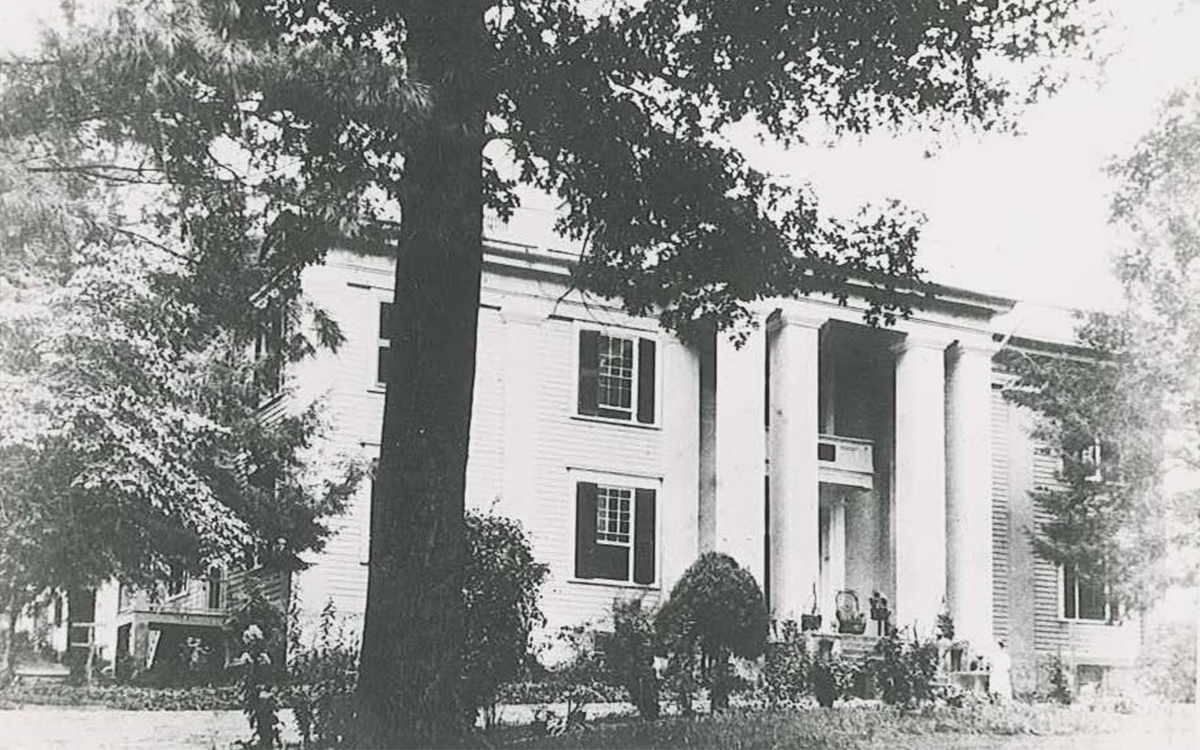
I live near the Clarkesville square at the foot of the hill where John Russell Stanford built Pomona Hall, later owned by the Minis family [Minis Hill, Rockwood] and Cam Dorsey before it burned in 1943.
It was commonplace to discard broken pottery and china in gardens. It’s a way to amend the soil and repurpose broken bits of household debris.
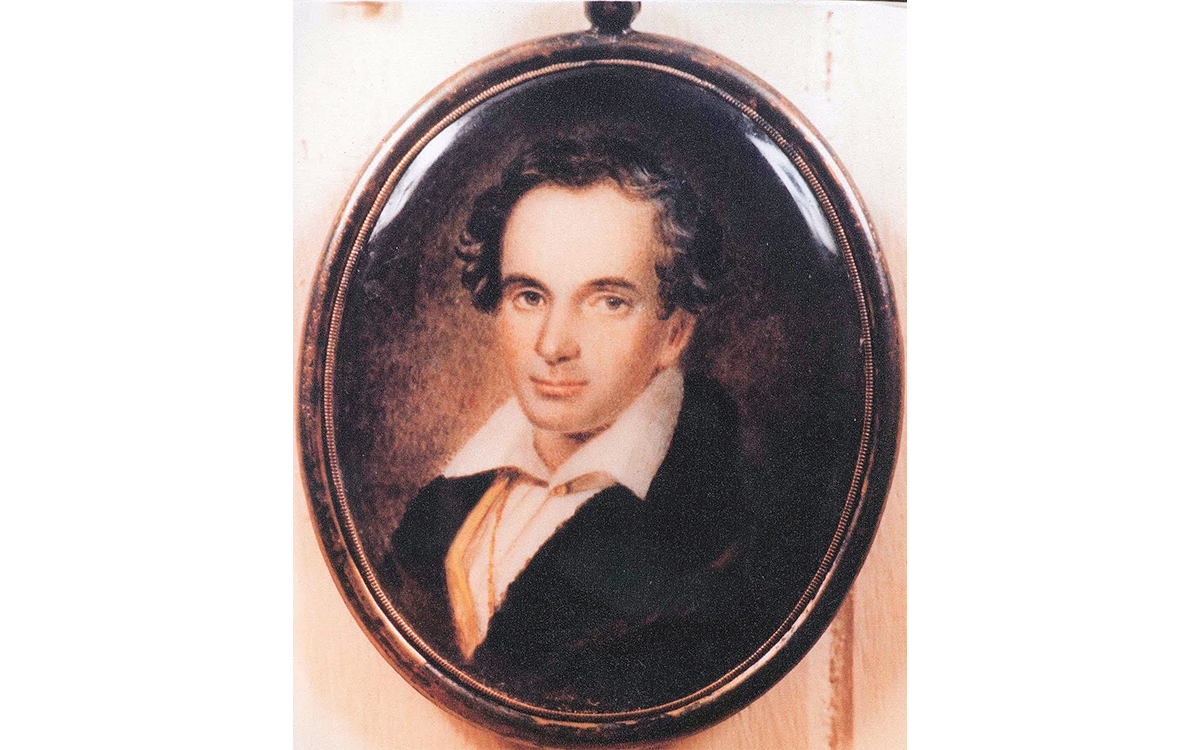
But who was John Russell Stanford?
Like many of us, he came to Clarkesville to build a life.
Born in Pennsylvania in 1795, he moved to Clarkesville in 1825, and in 1836 he married Cordelia Isabella St. Leger Charlton of Wilkes County, Georgia. She was the daughter of John K.M. Charlton, the owner, and publisher of the Washington News.
He and Cordelia raised nine children in the growing village of Clarkesville.
In 1848-49, Stanford developed an expansive estate on 85 acres on that hilltop near the Clarkesville Square.
Vintage photos and primary source documents help us visualize Stanford’s dream for his family.
On Dec. 11, 1848, Susan M. Kollock wrote to her husband, George J. Kollock, that she had visited Mrs. Stanford in her newly completed home.
“She [Cordelia] carried me into every corner of her house and entertained us very handsomely. She has been in her new house for about ten days.”
Designed to replicate the Stanford ancestral home in England, the two-story Pomona Hall had 16 rooms, four porches, and a cellar.
With trees from the property and local stone, artisans from England brought Stanford’s home to life.
The home featured cross halls, both north/south and east/west, six doors, front and back stairs, eight fireplaces and 15 closets, and four built-in cupboards.
The cellar timbers were hand-hewn, morticed, and wood-pegged without nails. The below-grade space included a milk room, vegetable room, paint room, and storage bins.
Pure spring water, abundant in these parts, provided plenty of irrigation for the growing season.
Outbuildings included a kitchen, woodshed, smokehouse, servant [formerly enslaved person] dwellings, overseer’s house, and corn crib. The Minis family added a barn on a stone foundation, greenhouses, a compost shed, and an engine house.
Some of the rock walls and gate posts are still visible.
Stanford served his community as postmaster and on the original vestry that founded Grace [Calvary] Episcopal Church in 1838.
Beyond acquiring land, he invested in 1856 with Phillip Martin, George Kollock, William Alley and George Phillips to establish the Clarkesville and Tennessee Railroad Company. The prominent business people planned to build a railroad from Clarkesville through Hightower Gap to Tennessee near copper mines.
This project never materialized. Timing is everything, and it wasn’t long before the war came calling.
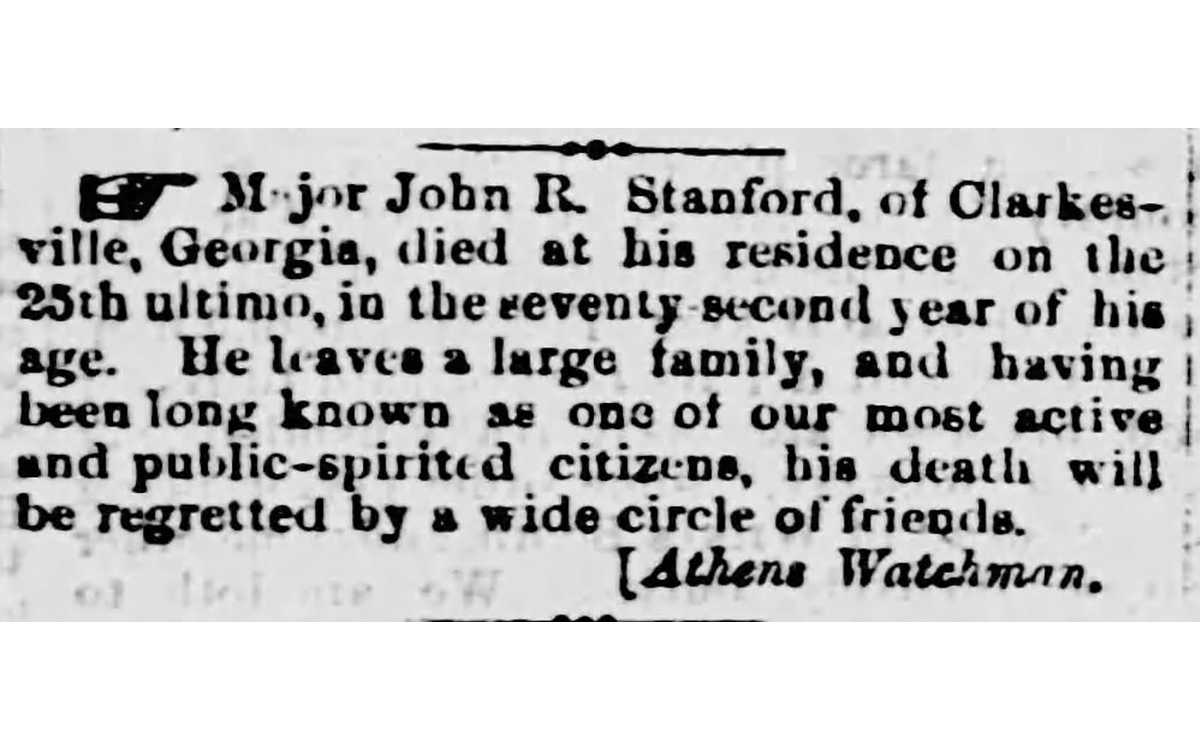
After the war, his fortunes shifted; Stanford died in 1867. Several years later, his widow sold the home and surrounding land to pay off a tax debt.
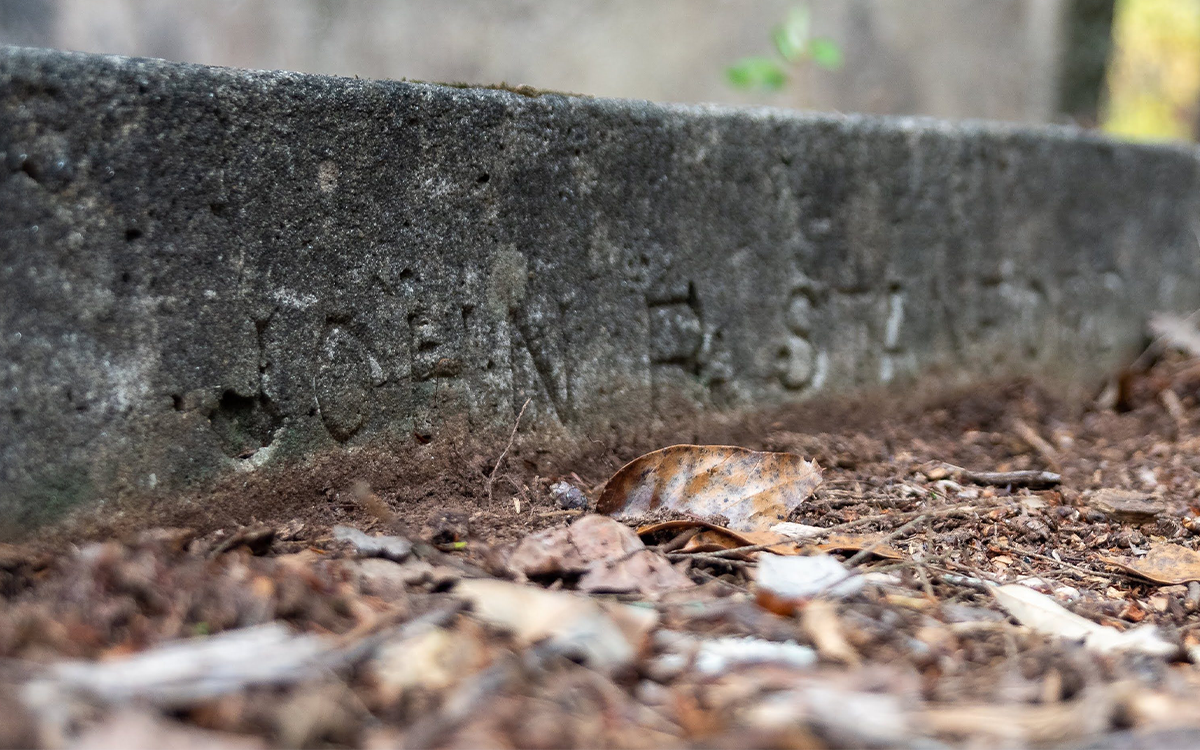
Stanford and several of his family members sleep at the Old Clarkesville Cemetery. His name is carved on the top of the wall enclosing the family plot. The wall fell years ago but is now upright.
And while I might discover more broken china cast off by the families that lived on the hill, the stories keep me captivated.
E. Lane Gresham is a writer, photographer and community lover. She is the chair of Historic Clarkesville Cemetery Preservation, Inc. and Director of Communications and Media for Prevent Child Abuse Georgia. Email her at elanegresham@gmail.com.