
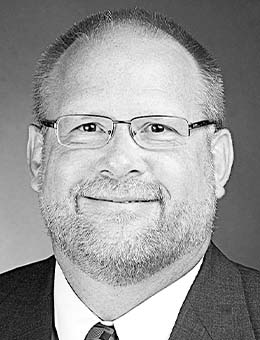
Perry Rettig
With nearly 40 years of experience as an educator, both K-12 and higher education, I have felt very blessed. No matter the generation or the region of the country, students really haven’t changed much, and good teaching is good teaching.
This past year I returned to the classroom, both teaching undergraduate and graduate courses, as well as supervising student teacher interns. In both settings I have witnessed hurt, yet at the same time I have been heartened.
When I first learned some school districts have adopted highly prescriptive curriculum – literally scripts for teachers, I was perturbed to say the least. Some scripts go as far as to write: “The teacher will ask ...” And, “the students will respond.” You could put an automaton in front of our children if that’s what teaching has come to.
Fortunately, most districts have not adopted this extreme. What I do appreciate is that professional educators have more resources than ever before from which to choose to help their students. But any approach to “teacher-proof” the classroom is doomed to failure. Teaching is both an art and a science. Universities do an exceptional job of teaching the science, and professional development and mentoring offered by the schools provide the art.
Politicians and bureaucrats who devise standardized pedagogy aim for a floor with the expectation that even the worst teacher can at least meet the minimal standard. However, the other side of that coin is such curricula do not reach excellence in the classroom or the art of teaching. Our best teachers have a great latitude for professional autonomy to make nuanced judgments for their individual students – for each child.
Technology is ubiquitous in today’s classroom. Even our primary grade students have their own classroom computers. Their assignments and portions of their lessons are pre-populated by their teachers, and while the teachers are working with small groups or individual students, these others are working with ease at their own tasks. At the high schools, students move easily from source to source enriching their understanding well beyond a textbook or sterile lecture.
Technology can do so much good. Technology can do so much bad. I’m referring to social media, of course, for the latter. I taught a Learning and Cognition undergraduate course this past spring. Every student was female. I was talking about the need for our classrooms to be a safe place for our students to explore, to be honest, and to stretch their thinking. The students agreed, of course. But one student said, “Dr. Rettig, sometimes teachers need to create a safe place for students to participate without others watching.”
I agreed and didn’t think much of it. Her comment gnawed at me, though, so I returned to it minutes later. I asked her why she said that. Her answer hurt more than I can say. She told of cyberbullying. The classroom might be safe, but when the kids get home, they get taunted without mercy.
Every student agreed. I am still haunted by those comments. I had a high school assistant principal in another district express to me that 96 percent of their school discipline problems originated on social media.
I think today’s students are much more quiescent than when you and I attended school. While this might feel reassuring, I’m concerned that they don’t question. We need them actively engaged and to question what we’re teaching and what they’re learning. On the other hand, I have witnessed spontaneous debates in our local high schools that were honest and civil. It felt like I heard their parents talking. Still, when the students would say, “I understand your point, but this is what I believe.” I felt they meant it. That gives me a great deal of hope.
In my estimation, our best students are better than ever, and our best teachers are better than ever. I am amazed at the high level of content being taught in our schools to all of our children. I worry that we might inadvertently go too far in standardizing the profession of teaching and lose out on the art. My admiration for our educators and our students continues to grow each time I step into a classroom.
Dr. Perry Rettig is a community contributor for The Northeast Georgian. He is a former vice president at Piedmont University and is now a distinguished university professor at Piedmont.